
 Image 1 of 1
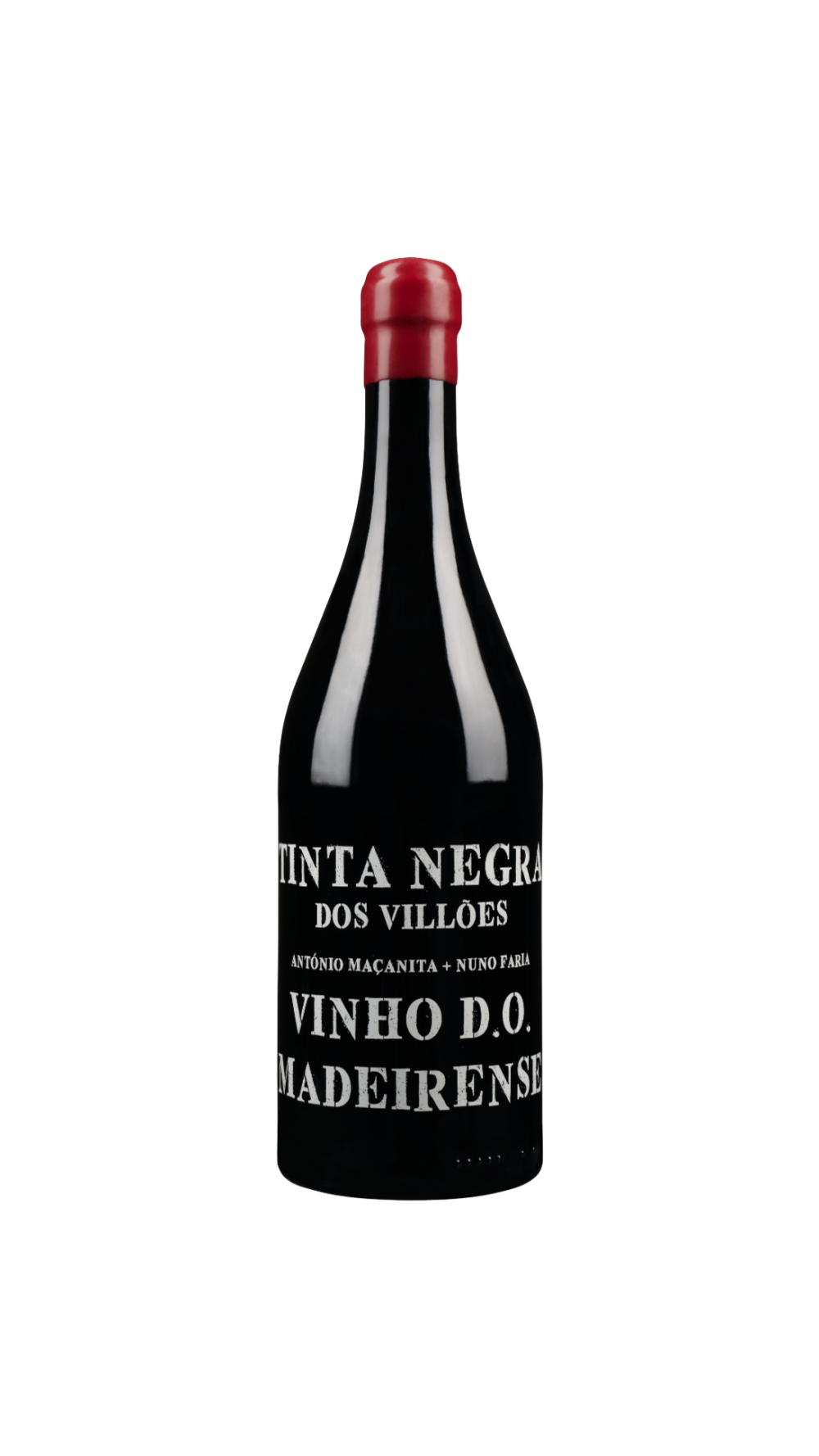
Companhia de Vinhos dos Profetas e Villões
Widely regarded as one of the most dynamic young winemakers in Portugal, António Maçanita crafts wines from the Azores archipelago to Alentejo, and now to Porto Santo, a small island off Madeira. He excels at capturing the essence of the regional terroir and traditions.
This latest project was created with his friend of 15 years, Nuno Faria, a Madeiran and restaurateur. The adventuresome duo have joined forces to explore the potential of these magical islands.
Listrão is produced only on the island of Porto Santo, in the archipelago of Madeira, and is also known as Palomino Fino in Jerez de La Frontera, and Listan Blanco in Tenerife. This Listrão wine comes from a low-lying vineyard 80+ years old, protected from the winds and sea air by crochet walls or reed structures. This was whole bunch pressed, and fermented in older 228L French barrels, where it remained for 10 months. Lean and marine, with tight lemon pith, green apple whipped with a saline rinse, and lit with a buzzy stoniness. This brisk white alluringly tastes of the sea. 2800 bottles, hand numbered.
“The 2021 Listrão dos Profetas Vinho do P. Santo is all Listrão (a.k.a. Palomino Fino) aged for 10 months in used French oak. It comes in nicely dry and at 12.4% alcohol. This is vaguely similar to the winery's Caracol in this report, with perhaps more cashews than almonds, but here the texture is more sensual. That might be the biggest difference between them. Neither is a lush or rich wine, and both rely on acidity and structure more than a fruity demeanor. The Caracol can seem a bit brighter, while this struck me as slightly richer; however, it is close, and all that is relative. There are still interesting flavor nuances here, like those toasted nuts, and the acidity is well integrated. It's hard to pick between the two, as they are different sides of the same coin, but if pressed, I'd take this first. Ultimately, the answer will depend on how they develop and whether there is further improvement. This should age pretty well, but let's be conservative for the moment. There were 2,800 bottles produced.
These are all table wines, of course—not the more famous fortified Madeira —from António Maçanita (Fitapreta and others) and Nuno Faria. This distant outpost of Fitapreta is really separate, and Fitapreta is only in very tiny print on the back, no doubt a legal formality. Maçanita and Faria are on the front, and these are under "Madeirense," a long way from Alentejo. The winery says that Madeira was claimed in 1420, while the island of "Porto Santo was the first island to be discovered by the Portuguese. [I]t has the name ‘Saint Port’ because it is a safe harbor for sailors. Vineyards are trellised close to the ground to protect them from the wind and can be protected by stone walls known as ‘muros de crochet’ (similar to Pico Island) or barriers of cannes (similar to Colares). One of [the] biggest challenges is the lack of rain, so [we irrigate] using all the rain of the year in a ‘flooding’ technique, storing the water in these porous calcareous soils. In terms of vineyard surface, there are only 15 hectares left of vineyards on the island." The winery has acquired five blocks (fazendas) with vine ages between 40 and 80 years old.” 93+ points, Mark Squires, The Wine Advocate
Read more about Companhia de Vinhos dos Profetas e Villões here.
Vintage: 2021
Bottle Size: 750 mL
Bottles per Case: 6
Price per Bottle: $99
Style: Still
Region: Porto Santo
Appellation: DO Madeirense
Country: Portugal
Grape: Listrão
Colour: White
Vegan: Yes
Organic: No
Biodynamic: No
Natural: No
Low Intervention: Yes
Companhia de Vinhos dos Profetas e Villões
Widely regarded as one of the most dynamic young winemakers in Portugal, António Maçanita crafts wines from the Azores archipelago to Alentejo, and now to Porto Santo, a small island off Madeira. He excels at capturing the essence of the regional terroir and traditions.
This latest project was created with his friend of 15 years, Nuno Faria, a Madeiran and restaurateur. The adventuresome duo have joined forces to explore the potential of these magical islands.
Listrão is produced only on the island of Porto Santo, in the archipelago of Madeira, and is also known as Palomino Fino in Jerez de La Frontera, and Listan Blanco in Tenerife. This Listrão wine comes from a low-lying vineyard 80+ years old, protected from the winds and sea air by crochet walls or reed structures. This was whole bunch pressed, and fermented in older 228L French barrels, where it remained for 10 months. Lean and marine, with tight lemon pith, green apple whipped with a saline rinse, and lit with a buzzy stoniness. This brisk white alluringly tastes of the sea. 2800 bottles, hand numbered.
“The 2021 Listrão dos Profetas Vinho do P. Santo is all Listrão (a.k.a. Palomino Fino) aged for 10 months in used French oak. It comes in nicely dry and at 12.4% alcohol. This is vaguely similar to the winery's Caracol in this report, with perhaps more cashews than almonds, but here the texture is more sensual. That might be the biggest difference between them. Neither is a lush or rich wine, and both rely on acidity and structure more than a fruity demeanor. The Caracol can seem a bit brighter, while this struck me as slightly richer; however, it is close, and all that is relative. There are still interesting flavor nuances here, like those toasted nuts, and the acidity is well integrated. It's hard to pick between the two, as they are different sides of the same coin, but if pressed, I'd take this first. Ultimately, the answer will depend on how they develop and whether there is further improvement. This should age pretty well, but let's be conservative for the moment. There were 2,800 bottles produced.
These are all table wines, of course—not the more famous fortified Madeira —from António Maçanita (Fitapreta and others) and Nuno Faria. This distant outpost of Fitapreta is really separate, and Fitapreta is only in very tiny print on the back, no doubt a legal formality. Maçanita and Faria are on the front, and these are under "Madeirense," a long way from Alentejo. The winery says that Madeira was claimed in 1420, while the island of "Porto Santo was the first island to be discovered by the Portuguese. [I]t has the name ‘Saint Port’ because it is a safe harbor for sailors. Vineyards are trellised close to the ground to protect them from the wind and can be protected by stone walls known as ‘muros de crochet’ (similar to Pico Island) or barriers of cannes (similar to Colares). One of [the] biggest challenges is the lack of rain, so [we irrigate] using all the rain of the year in a ‘flooding’ technique, storing the water in these porous calcareous soils. In terms of vineyard surface, there are only 15 hectares left of vineyards on the island." The winery has acquired five blocks (fazendas) with vine ages between 40 and 80 years old.” 93+ points, Mark Squires, The Wine Advocate
Read more about Companhia de Vinhos dos Profetas e Villões here.
Vintage: 2021
Bottle Size: 750 mL
Bottles per Case: 6
Price per Bottle: $99
Style: Still
Region: Porto Santo
Appellation: DO Madeirense
Country: Portugal
Grape: Listrão
Colour: White
Vegan: Yes
Organic: No
Biodynamic: No
Natural: No
Low Intervention: Yes
Alexana Winery
Though named Terroir Series, this is a Willamette-wide blend of various soils and clones. The wine is a selection of barrels from the dry farmed younger blocks of the Revana vineyard in Dundee Hills, along with vineyards in Yamhill-Carlton, Eola-Amity, Chehalem Mountains, and McMinnville, and clones Pommard, 115, 777, Wadenswil, 667, La Tache, 943, 114, 828, Coury, and 113. Each lot is separately native fermented whole berry before aging 11 months in French oak (23% new). Forest, wild cherry, fresh moss, and pretty florals rule the silken palate, sided with fine, long tannins and finishing with a gently warming baking spice note. Quite polished and fresh, this medium bodied wine is drinking ideal now with any kind of mushroom / duck dishes.
“Vivacious and expressive, with sleek raspberry and cherry flavors laced with rose petal, orange peel and hints of forest floor as this sails on the long, supple finish. Drink now through 2030. 6,490 cases made.” - 93 points, Tim Fish, Wine Spectator
Read more about Alexana Winery here.
Vintage: 2021
Bottle Size: 750 mL
Bottles per Case: 6
Price per Bottle: $65
Style: Still
Region: Oregon
Appellation: Willamette Valley AVA
Country: USA
Grape: Pinot Noir
Colour: Red
Vegan: No
Organic: No
Biodynamic: No
Natural: No
Low Intervention: No


Minimus
Minimus
Chardonnay Dijon Free
No Dijon clones were harmed in the making of this wine. Though Dijon clones are prevalent throughout the Willamette, they wanted to create a wine using only heirloom clones. This used Calera, Old Wenté, Musqué, Mt. Eden, Mendoza, and spent 16 months in 30% new French oak. Showing beautiful evolution, but still shining, with shimmery lemon and a buzzy undercurrent livening yellow and green apple, pear skin, subtle toast on a layered palate. Polished and impressive, reflective of the striking potential for Willamette Chardonnay.
"Beautiful chardonnay, as rich, sumptuous and unctuous as one could want from the Willamette, but also this stony and flinty subtlety running through the wine's interior like a hidden treasure of a message. So graceful and gracious, clearly exulting a sense of vineyard pace and place coaxed graciously by the people who work to make this fruit so real and proper. Excellence incarnate for a "Dijon-free" clonal iteration of the standard variety, opted for and exulted instead by that which is truly local. Drink 2023-2027. Tasted November 2023.” - 94 points, Michael Godel, WineAlign.com
"The first chardonnay I have seen promoted as Dijon-free, a reference to the invasion of French Dijon clones in recent years. It uses more 'native' clonal stock instead - Calera, Wente, Musque and others - and signals a reversion to American chardonnay of old. Indeed the very ripe banana, floral and buttery/custardy notes, complete with oodles of clove/nutmeg barrel spice - does recall the 80s. It is full bodied, off-dry warm and very rich. The texture is quite silky and the heat is on, yet the acidity holds. All kinds of complexity and power here, with excellent to outstanding length. The name of the wine is given a signal to the style but it is oblique. Tasted November 2023" - 93 points, David Lawrason, WineAlign.com
"Work past the creepy front label, and the tongue-in-cheek "Dijon free" mention on the back label (a reference to the proliferation of the so-called Dijon clones of chardonnay, whose arrival and spread in the early 1990s signalled the beginning of serious quality chardonnay in Oregon), and get on to the serious wine contained within, one with marked barrel influence and rancid butter flavours in a classical style. The palate is fullish and intensely flavoured, with resinous oak notes and lemon curd, creme brulée flavours. One can't argue with the flavour intensity and concentration - off-the-charts high, and the superb length, bold, dense and powerful. Similar quality from Napa would command a far higher price. Drink or hold short term - I'd capture with the remaining fruit intact, even though it's anything but a fruity wine. Tasted November 2023.” - 93 points, John Szabo, MS, WineAlign.com
"Cheekily labelled as a "Dijon Free Chardonnay", this assemblage is made from only heirloom clones such as Calera, Old Wenté, Musqué, Mt. Eden and Mendoza that have matured for 16 months in 30% new French oak. Despite the fact that the oak is quite prevalent on the palate, the wine is not heavy and exhibits a great deal of lift from acidity. Aging gracefully, there is very little oxidation noted and the fruit is still generous on the palate. A pleasant degree of nuttiness has surfaced adding to the overall complexity. Showing a notable stamp of place and a low-intervention cleanliness. The label is a bit dark and enigmatic in contrast with the wine. Best now to 2027. Tasted November 2023." - 93 points, Sarah d'Amato, WineAlign.com
Vintage: 2017
Bottle Size: 750 mL
Bottles per Case: 12
Price per Bottle: $55
Style: Still
Region: Oregon
Appellation: Willamette Valley AVA
Country: USA
Grape: Chardonnay
Colour: White
Vegan: No
Organic: No
Biodynamic: No
Natural: No
Low Intervention: Yes